Jojobet GirişmatbetMatbetjojobetİmajbetjojobetJojobetjojobetultrabetcasibomcasibomcasibomjojobetcasibom girişşanlıurfa konteynerBetpascasibombetcio girişİmajbetTipobetHoliganbetHoliganbetgrandpashabetTipobetjojobetjojobetmeritkingmarsbahis girişjojobet giriş
Policonomics » LPsection » Cost I: Average and marginal costs

Cost I: Average and marginal costs

Summary

Two things determine profits: income, or turnover (the price at which we sell something) and costs (how much we spent making what we sell). Therefore, knowing how much our costs are going to be is essential when planning the viability of a business.

Average costs are those associated to one unit of production. Costs per unit grow quicker as production increases, so we find the arithmetic average as the sum of costs divided by the sum of production:
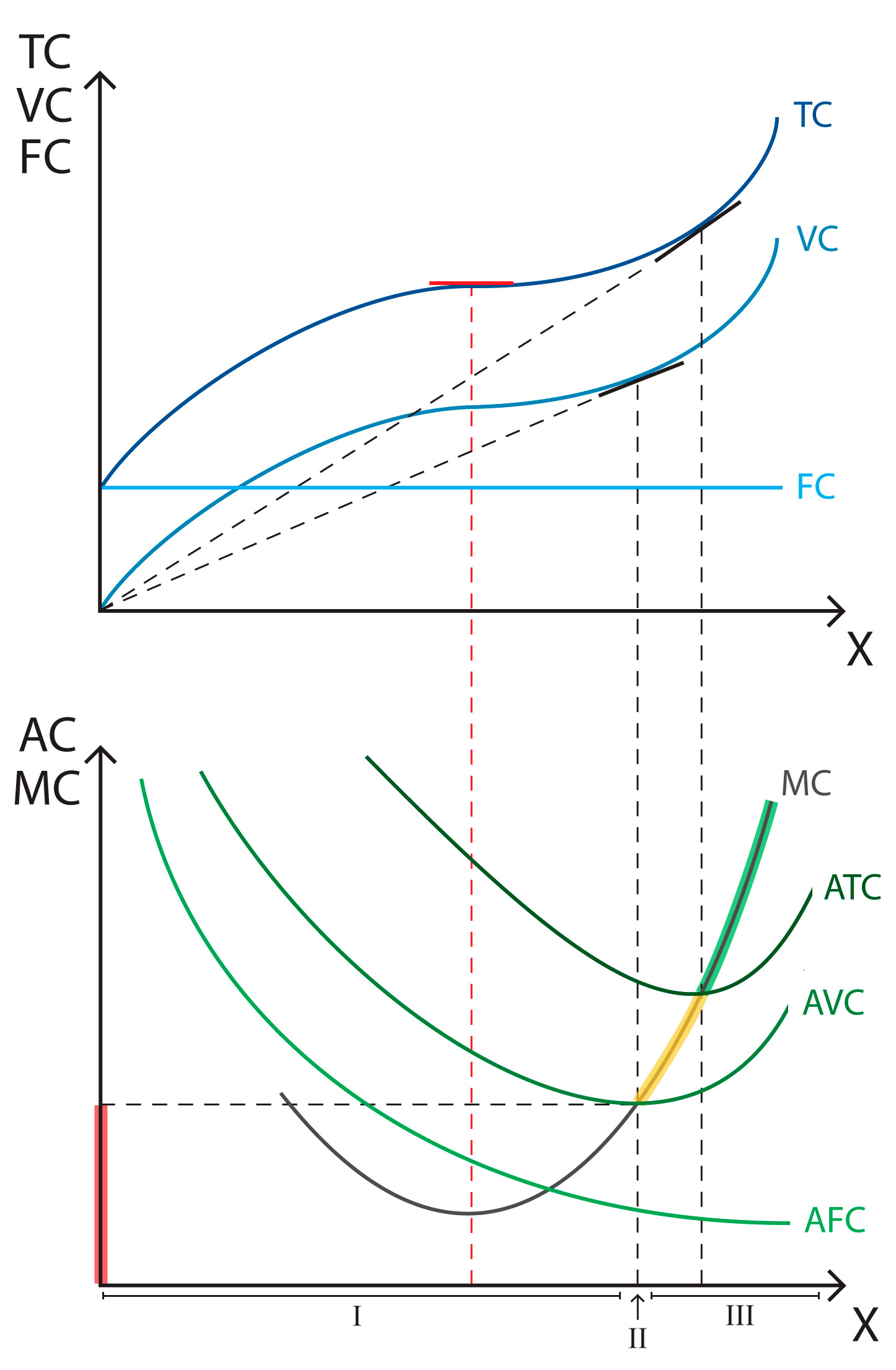
Short run cost analysis

Av. fixed costs: Av. variable costs: Av. total costs:
formula-Average-fixed-cost formula-Average-variable-cost formula-Average-total-cost


Marginal costs are a very important concept in Economics because they show costs at a very specific point in time: they show the cost associated with producing one additional unit at any given production level.

They are the partial derivative of total or variable costs. This is an important point: because the partial derivative as respects quantity is zero for fixed costs (as these are independent of production levels), the partial derivative of variable and total costs is the same. Marginal costs, as any derivative, are tangent to total and variable cost curves at each point.

   formula-Marginal-cost

We are now in a position to put all of this together and find out what decisions we can make regarding short run production, while analysing costs.

Jojobet GirişCasibom Girişjojobet girişJojobet Güncel Girişcasibomcasibom girişcasibom girişcasibom girişcasibomcasibom girişjojobet